Improving safety, visibility, visitor experience, and operational resilience across high-footfall venues through connected systems, AI, and integrated building technology.
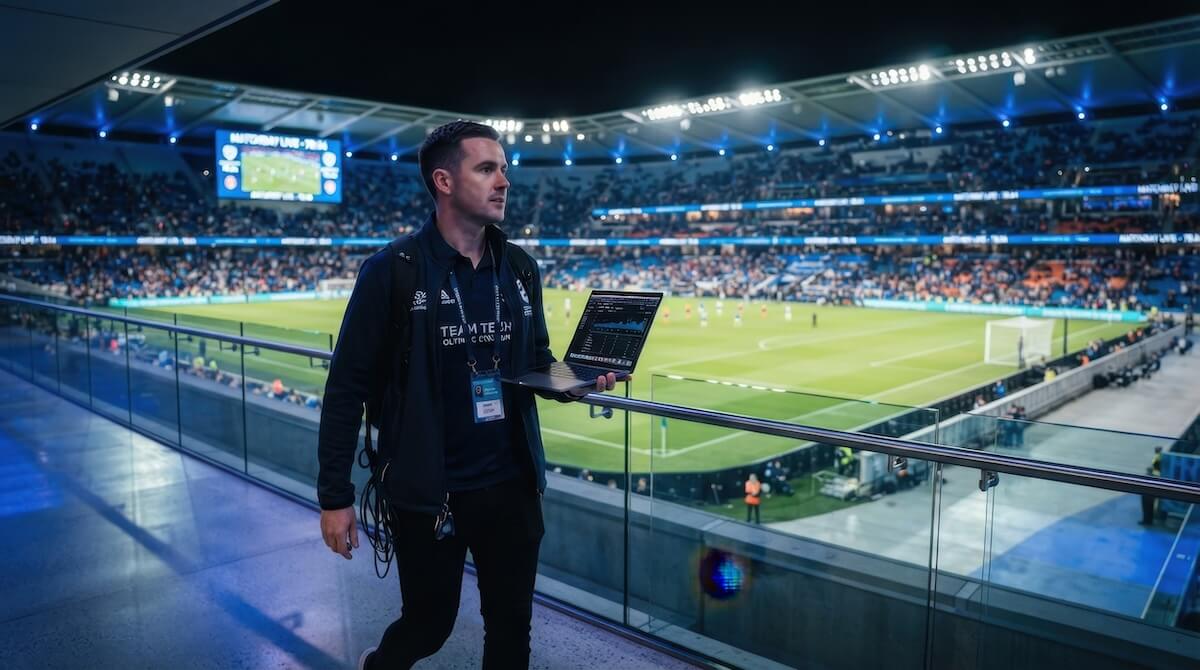
Pinnacle helps stadiums and arenas improve safety, visibility, visitor experience, and operational resilience by connecting existing systems, building technology, and operational data into one platform.
Stadiums rarely operate in one fixed way. A venue may need to shift between match day, concert, hospitality, conference, maintenance, emergency, and non-event modes, each with different priorities, access rules, alerts, workflows, and response procedures.
Pinnacle helps teams manage these changing operating modes by giving security, facilities and guest services teams a clearer operational picture, helping them respond faster, prioritise issues, and make better use of existing infrastructure without wholesale system replacement.
Stadiums and arenas often operate across complex, high-footfall environments where safety, visitor experience, facilities, and event operations need to be managed differently depending on how the venue is being used.
Pinnacle provides a centralised integration and monitoring layer that brings together existing systems such as CCTV, access control, fire systems, public address, turnstiles, building systems and communications into one operational view.
This gives security, facilities, stewarding, guest services, event control, and management teams a shared picture of what is happening across the venue.
Stadiums and arenas need to operate differently depending on the event. Pinnacle can help teams move between match day, concert, hospitality, conference, maintenance, emergency, and non-event modes, with different priorities, alerts, access permissions, monitoring focus, and response procedures for each scenario.
Pinnacle also creates a practical foundation for deploying new AI technology across existing camera infrastructure. AI analytics can be layered onto current systems to identify risks, trends, crowd build-up, congestion, safety issues, or service-impacting events, with outputs brought back into Pinnacle as actionable alarms, insights, and dashboards rather than sitting in another separate system.
Over time, the data collected through Pinnacle can help stadiums and arenas better understand how their venues operate across different modes, including match days, concerts, hospitality events, conferences, maintenance periods, emergency scenarios, and non-event operations. This can support better planning around crowd movement, visitor experience, facilities demand, safety, resilience, staffing, and post-event review.
Pinnacle also creates a strong foundation for future AI-assisted operations. By layering analytics onto existing camera infrastructure and connecting outputs into one operational platform, venues can move towards more intelligent event management, including automated triage, earlier identification of crowd build-up or service issues, recommended next actions, and more consistent response across security, facilities, stewarding, guest services, event control, and management teams.
Pinnacle enables stadiums and arenas to bring fragmented systems, venue data, and building technology into one connected operational platform, helping teams manage different venue modes, improve live event visibility, and respond more consistently across safety, security, facilities, crowd movement, and visitor experience. By making better use of existing infrastructure and enabling new AI analytics to be layered onto current camera systems, Pinnacle supports a more connected, intelligent, and resilient approach to event-day operations without requiring wholesale system replacement.
Improving building visibility, occupier experience, and operational resilience through connected systems, AI, and integrated building technology.
Read the full use case Housing associationsImproving estate visibility, tenant safety, and operational response through connected systems, AI, and integrated building technology.
Read the full use case High-end residentialImproving estate visibility, security response, household support, and operational resilience across high-end residential properties through connected systems, AI, and integrated building technology.
Read the full use case